
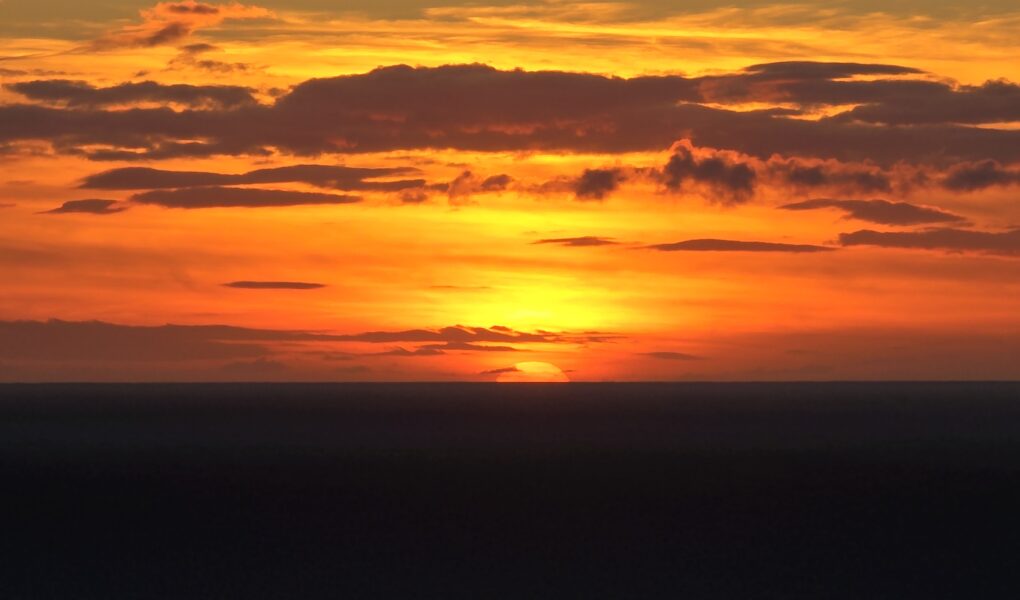
Falling asleep under the stars, lying on my back, with only a sheet of Tyvek separating me from the lush green grass… and waking up in the same position in the morning.
Yeah, that has NEVER happened.
I’m that person who twists and turns all night, sleeps on her belly, and wakes up with marks on her face from her rings and bracelets. I can’t even sleep calmly in my own bed – let alone outdoors in nature. So when it came to choosing my sleep system, I had to be pretty particular. Otherwise, I’d barely sleep and wake up looking like a wrung-out potato.
So what do I use?
Therm-a-Rest NeoAir XLite
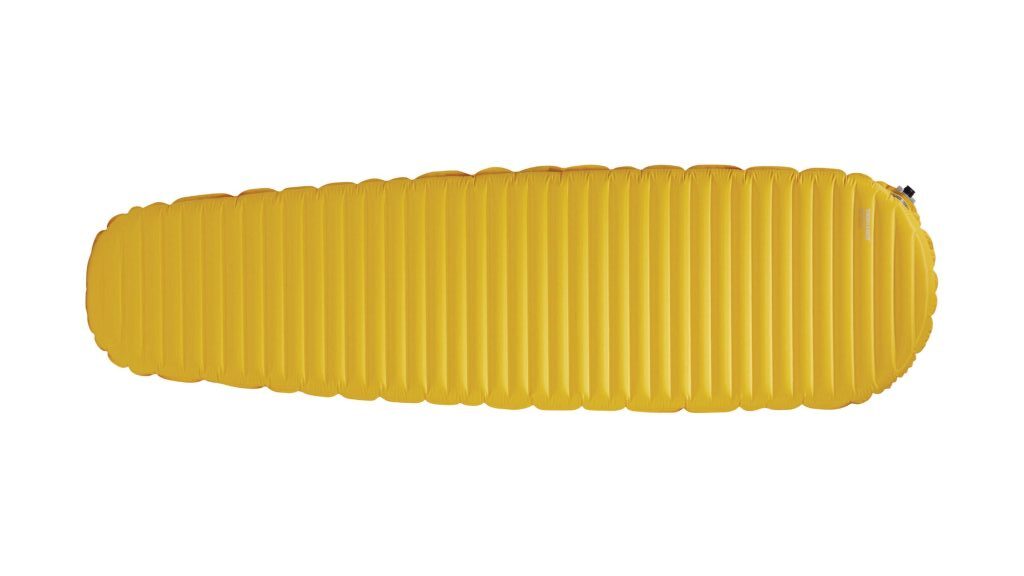
Ah yes, the famous yellow pad – a classic in the ultralight backpacking community.
I use the small version of the Therm-a-Rest NeoAir XLite, and I usually inflate it about two-thirds of the way, just enough so my hip doesn’t touch the ground when I sleep on my side. It’s comfortable and quiet for an air pad, with excellent thermal insulation (R-value: 4.5) that makes it a good three-season pad.
- Weight: around 230 g (small version)
- Packed size: roughly 23 x 9 cm
- Insulation/R-value: 4.5
I’ve never had issues with it puncturing, even when sleeping on slightly prickly ground. The inflation system can be a bit fiddly, but still much better than some other valves I’ve tried.
What would I change?
Honestly, I’d love a shorter but wider version – my feet always hang off anyway, but turning over on this narrow pad can be tricky. (If you know of a model like that, let me know!)
ZenBivy Light Sheet + Light Quilt Convertible 25°F / -4°C Down
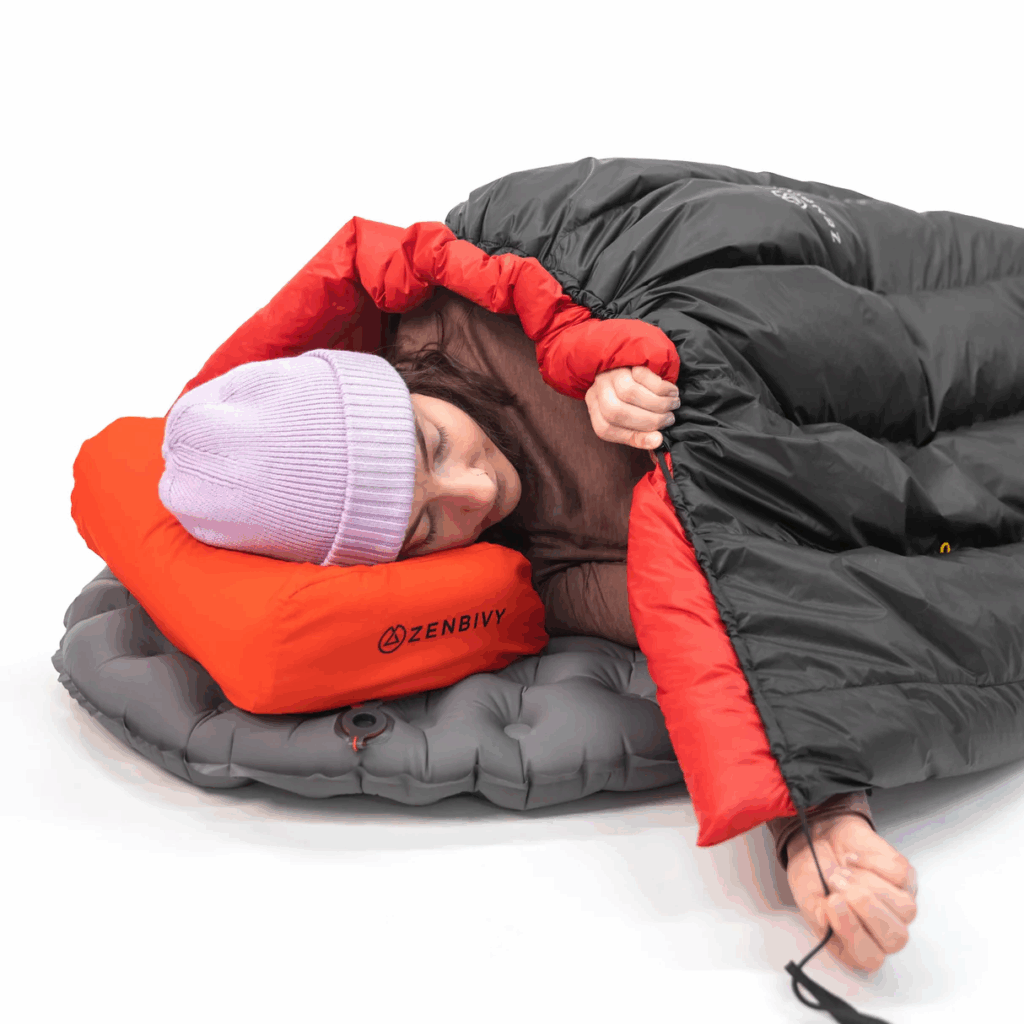
My sleeping bag has always been the biggest struggle. I move constantly in my sleep, sleep on my side with one leg bent, and I’m not exactly tiny – the usual mummy-style bags felt like straightjackets.
I tried using quilt/blanket-style systems before, but they were always so drafty. Adding a liner only made things worse: I’d wake up tangled and still cold. Sometimes I even hed to resort to my emergency foil blanket, wrapping myself like a burrito to block the drafts(Only a good idea if you do have a way to dry your sleeping bag, there is a ton of condensation on the inside of the blanket in the morning, which soaks into you bag).
Then I came across ZenBivy, and it was the first system that actually worked for me. It’s kind of a hybrid between a sleeping bag and a quilt. There’s a sheet that attaches to your sleeping pad with little “wings,” which helps stop drafts, and it still has a hood like a mummy bag. I bought the convertible version so I can use it open like a blanket or close it up to make a foot pocket when it’s cold.
Mine is the -4°C rated one, and honestly, it’s become one of my favourite pieces of gear. I’ve even taken it into hostels with me – like on my trip to the Canary Islands – just because I sleep so well in it.
- Weight: around 850–950 g
- Insulation: 800 fill power down
- Temperature rating: 25°F / -4°C
- Packed size: about 6 x 12 inches
Cons? It’s not cheap, and it definitely smells a bit like duck when new – not in a terrible way, just in a “yep, that’s real down” kind of way.
The Rest of the Setup
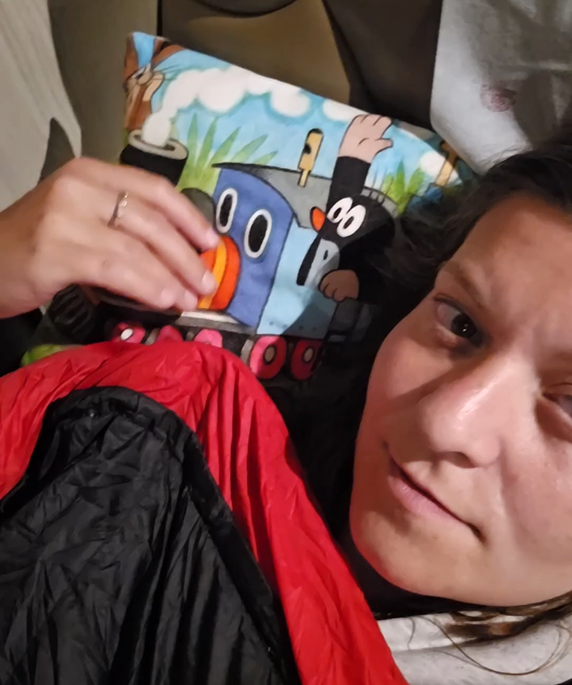
For a pillow, I keep it simple — I use my clothing bag or a scrunched-up hoodie. If my feet get cold, I put on my waterproof socks, which work surprisingly well for warmth.
And when I’m feeling fancy, I’ll bring a small electric pump for the Therm-a-Rest – because let’s be honest, that valve can be annoying at the end of a long day.
That’s really it. Lightweight, cozy, and chaos-proof (mostly). My little nest under the stars.
P.S. Is it just me, or do you also think about safety when choosing your gear colours? I picked the black and red version of the ZenBivy – the black side helps me blend in at night, and the red side can be seen from far away in case of an emergency. Do you agree?